Want to start a butterfly garden to attract beneficial bugs and pollinators to your yard? Want an easy plant to start with? Coupled with other flowering perennials, Buddleia or butterfly bush can be a great choice for your butterfly garden.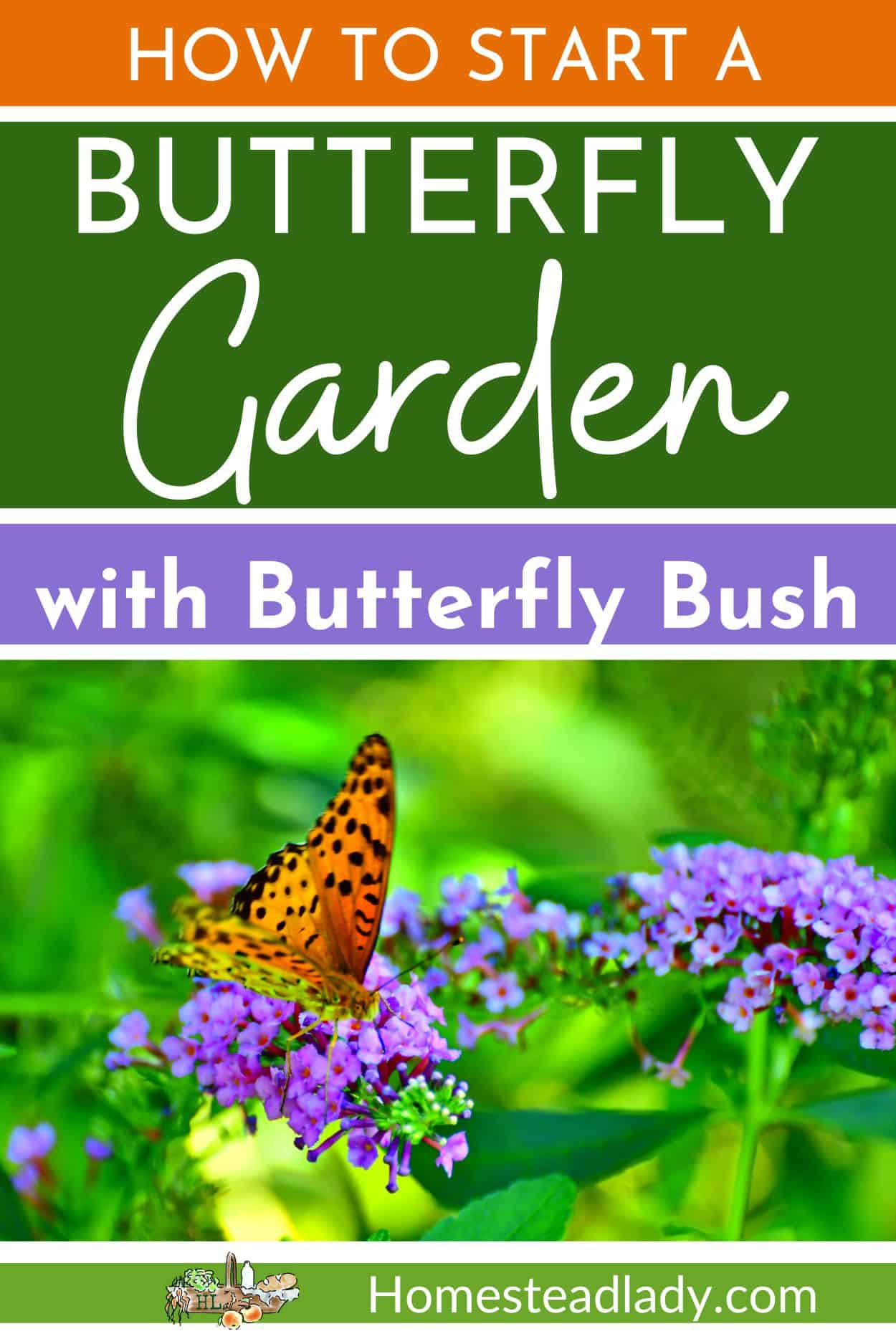
Butterfly Garden – Begin with the Butterfly Bush
Many of you have probably seen Buddleia (Buddleia davidii, or as it’s commonly known, butterfly bush), in yards around your neighborhood or community. It comes in a variety of colors, including pinks, white, purples and there’s even one referred to as a rainbow bush for it’s variety of colors.
If you’re new to butterfly habitat creation, butterfly bush can be a good place to start.
Butterfly Bush
Here are a few things to know about growing Buddleia:
- These evergreen bushes are hardy from about zone 5 to 9. In my zone 6 garden with occasional stints of zone 4 winter weather, it usually survives as long as I mulch it heavily. It’s not bothered by either my heat or humidity in the summer.
- They will tolerate a range of soils, although they like good drainage.
- Buddleia can require heavy pruning every year so that it doesn’t grow out of control. Be sure to clip spent blooms to prevent reseeding which it will do vigorously. You can also plant newer seedless varieties, if you can find them.
Some varieties of Buddleia can get to be 12 feet tall, but there is a dwarf variety called “Bluechip” that I’ve grown before and liked.
Other Pollinator Resources
Native Flowering & Fruiting Perennial Bushes
How to Attract Mason Bees & Make a Bee House
Invasive Alert: Deadhead Butterfly Bush
In many places Buddleia is considered invasive because it can reproduce itself easily by seed, as I mentioned. When you plant butterfly bush, commit to deadheading them every year.
To deadhead means to snip off the spent flower heads, instead of leaving them to drop seed.
If you don’t deadhead them, the Buddleia flowers will form seed pods, fall, and sprout weedy babies. These baby plants can sprout almost anywhere and can become quite aggressive in the landscape.
(Penn State shows a map of where Buddleia can be invasive, so if you live in one of these states, plant one of our suggestions below instead.)
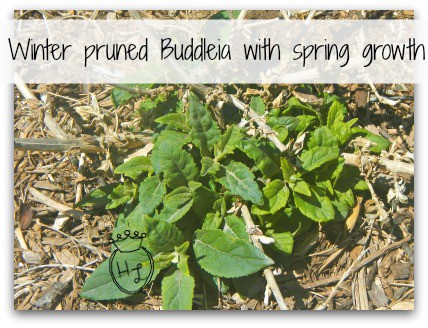
Never fear! The spent flowers cut off easily and you can compost them unless they’ve developed seed pods.
So, deadhead your plants during the season (quit sighing, it doesn’t take that long) to prevent them from becoming a nuisance in the garden. The bonus is that this deadheading will encourage new flowers to appear.
Butterfly bushes reward you with blooms all spring and summer that attract, not only butterflies, but all manner of pollinating insects. Bees love Buddleia nectar!
Alternatives to Butterfly Bush
If you’re concerned about planting butterfly bush in your area, try other pollinator-friendly perennial bushes. It would be best if they grow natively in your area. These might include:
- Lilac, Syringa vulgaris
- Button Bush, Cephalanthus occidentalis
- Hydrangea, hortensia – lots of species
- Rose of Sharon, in the U.S., Hibiscus syriacus
- Summer Sweet, Clethra alnifolia
- Weigela, Caprifoliaceae family
There are even more suggestions listed below. Diversity of planting encourages even more pollinators, so consider planting these other perennials even if you are able to grow butterfly bush where you are.
For a more in-depth discussion of plant diversity, please visit the article below. If we observe nature closely, we can learn a lot about how she manages her gardens. Then, we can adopt some of those same methods. This is called biomimicry, or mimicking what nature does to plant more, work less, and harvest in abundance!
Caring for Butterfly Bush in the Butterfly Garden
Buddleia really doesn’t require fertilizer in most soils and will take care of themselves (minus the pruning). They will grow and bloom year in, year out. Be sure to plant them in full sun. They can benefit from afternoon shade in really hot summers.
Water your butterfly bush deeply and infrequently. Mulch the roots with several inches of wood chip mulch in cold winter areas. To learn more garden tips, especially if you decide to grow a vegetable garden, be sure to check out the Gardening Notebook below.
Diversity in the Butterfly Garden
Group Buddleia with spring blooming bulbs, rugosa roses, and Michaelmas daisies for pleasing butterfly garden plants early spring through fall.
Add a few other plants around these to lend support to the bulbs, bushes, and flowers. These might include:
- Borage to provide a lot of green, leafy material that can be cut and laid down as a natural mulch.
- Strawberries to cover the ground and suppress weeds while keeping the soil cool.
- Fall blooming asters and chrysanthemums to provide even more food as the growing season winds down.
This method of planting is called companion planting; or in permaculture language, guild planting. Each plant in the group performs a particular function.
- To get an idea of how to replicate this method in the vegetable garden, please visit the article: 7 Steps to Planting a Vegetable Guild.
Buddleia will provide nectar for your butterfly garden, but not much in the way of leaves that caterpillars like to munch on. Consider planting these other butterfly-friendly plants to encourage happy pollinators to stay, eat and breed:
- Spicebush (Lindera benzoin)
- Sweet Pepperbush, Clethra alnifolia
- Dogwood, Cornus spp.
- Mountain Laurel, Kalmia latifolia
- Pussy Willow, Salix discolor
- Narrowleaf Meadowsweet, Spiraea alba
- Sargent’s Cranberry Bush, Viburnum sargentii
For more information on pollinator-friendly plants, please read this post: Bee House in the Bee Friendly Garden.
Be sure to include room for pollinator plants as you design your homestead layout!
What about you? What’s your favorite pollinator plant?
—>>>Pin This Article for Later<<<—


I just went out and purchased a pink bicolored butterfly bush this past weekend. The kiddos and I planted all sorts of seeds for host and nectar plants this spring, but since they haven’t taken off yet, it just looked like an area we don’t mow. The butterfly bush gave that area a garden look about it. Plus, on the way home, I ran into a friend that offered me a bunch of native milkweed. Score!
Wow – what an exciting patch that’s going to be! My kids will stay outside for hours just watching the bugs that come and go – who needs tv this summer? Congrats on your milkweed score, too – what a treasure!
I planted milkweed seeds this year. They may take a while to sprout. Amazing, we don’t have any growing natural near us. But we have lots of poplar, cottonwood, and willow which are good for those huge silk moths, and for mourning cloaks. I let thistles grow in the pastures, too, for breeding swallowtail butterflies and zebra swallowtales.
Thanks for the info on Butterfly bush. I didn’t realize that it was different than milkweed.
I’ve never seen a zebra swallowtail – sounds lovely!